Category: Heroes

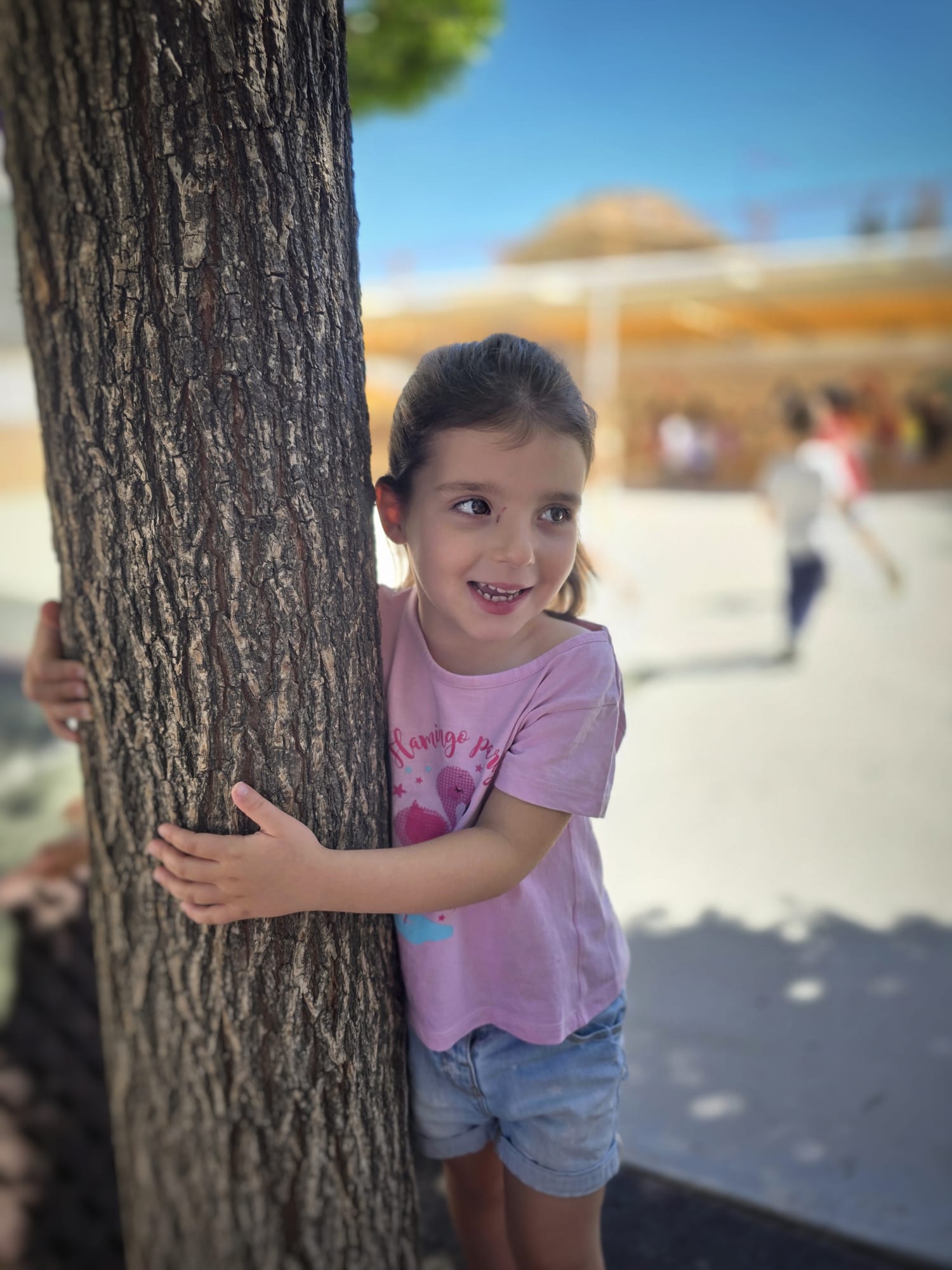
  • Macarena

    Macarena

    Macarena
    • Year of birth: 2020
    • From: Jaén
    • Diagnosed: March 2021
    • Parents: Alfonso and Macarena
    • Siblings: Valeria and Alba
    How would you describe your daughter?

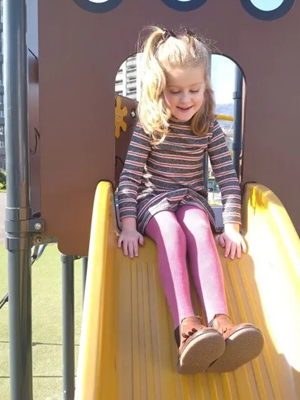
    Macarena is a very cheerful and affectionate girl. She loves music, and wherever it is playing, she starts dancing.

    How did we feel when we found out our child has SLC6A1?

    When we were given the diagnosis, our world fell apart, and we spent quite a long time in a very bad way psychologically.

    How did you know something was wrong?

    At 6 months we began to think Macarena was deaf, and we put ourselves in the hands of professionals.

    The hardest part of being an SLC6A1 family?

    The hardest part is emotional, because this disease creates a lot of uncertainty about what our daughter’s life will be like in the future.

    What are your dreams for Macarena?

    That Macarena becomes fully independent and can lead a normal life in the future.

    Why are donations to SLC6A1 Spain needed?

    Donations are very important because they help fund research into our children’s disease.

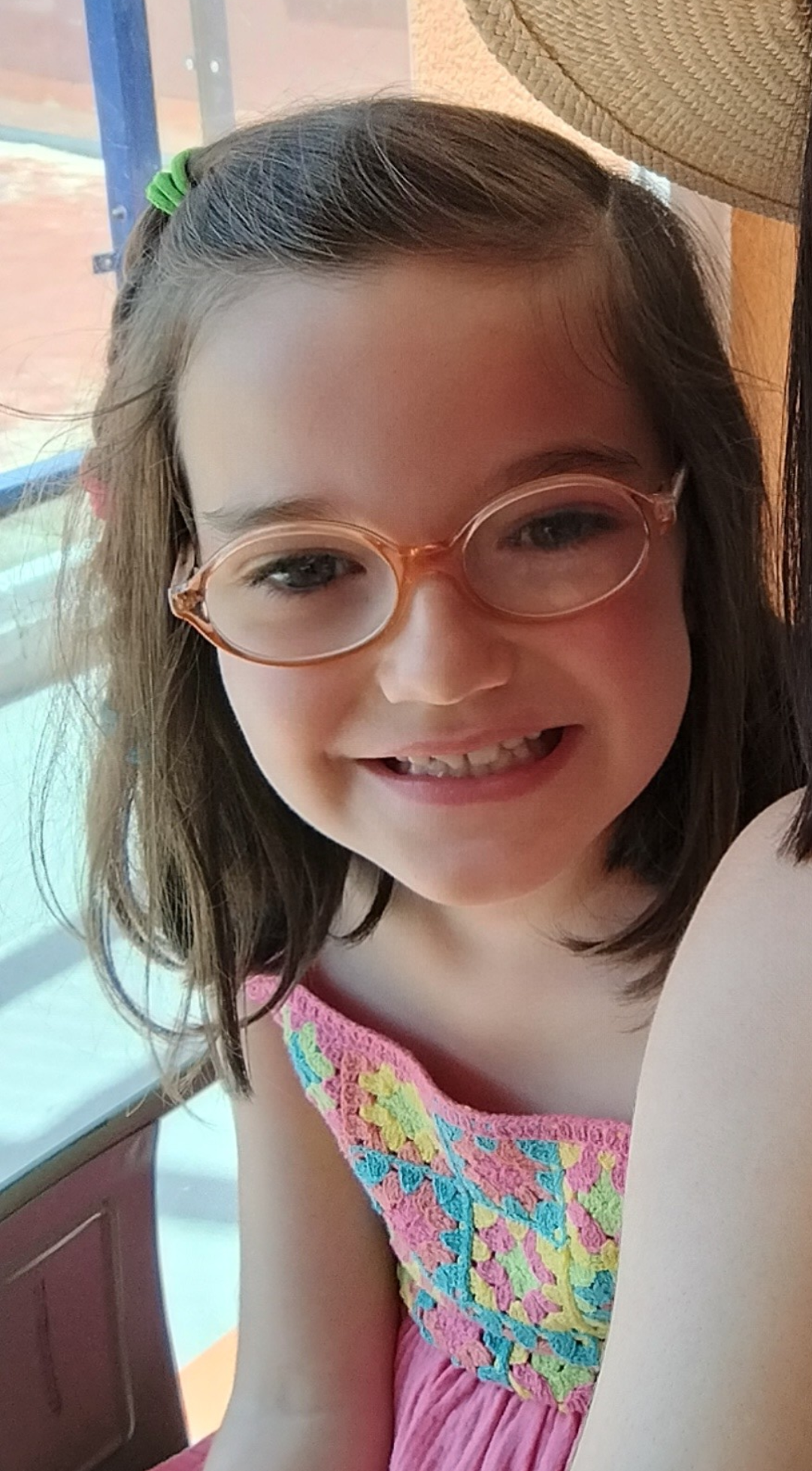
  • Isabel

    Isabel

    Isabel
    • Year of birth: 2016
    • From: Seville
    • Diagnosed: October 2023
    • Parents: Manuel and Macarena
    • Siblings: none
    How would you describe your daughter?

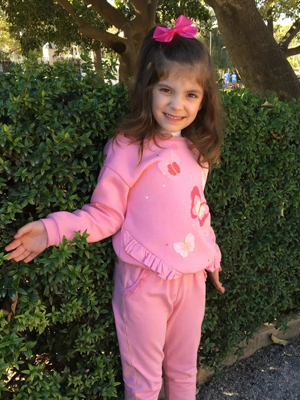
    Isabel is, above all, a happy girl. She is friendly and very affectionate with the people close to her. She is very innocent and has a pure smile. She can hold conversations and talk about her experiences, and she speaks quite clearly, but she cannot tell whether she has told you something once, three times or not at all. She finds learning difficult and forgets many things. When she is happy she has many stereotypies that she does not control and is not aware of. She is a hard-working girl who wants to learn. Very willing.

    How did we feel when we found out our child has SLC6A1?

    On the one hand, it was a relief to put a name to what we had been looking for; on the other, it confirmed our worst suspicion: that this was not going to be easy to solve and would not simply pass with the years.

    How did you know something was wrong?

    From when she was a baby, we saw that she was slower. She did not lift her head when expected, did not roll over, did not do the typical clapping, was not ticklish, her pain threshold was astonishingly high, she was very clumsy in her coordination, and it took her a long time to crawl and learn to walk. She would fall unexpectedly; at other times she lost her balance and her legs were left trembling… Something did not add up…

    The paediatrician said she was slow but was reaching the developmental milestones. But on top of that there were stereotypies and difficulty learning colours or the names of family members, so at the age of 2 we decided to find out for ourselves what was going on. We took her to a private assessment centre, and with that assessment we started to take action. At first it was just a developmental delay that would improve.

    The hardest part of being an SLC6A1 family?

    How little information there is. It is a mutation that has only been known for a very short time, so there is very little information, and there are no known cases of adults to help us understand how it may evolve.

    What are your dreams for Isabel?

    Our dream is for her to have a full life. For her to learn to read and write, and to be able to have a job one day that allows her to be as independent as possible. But above all, for her to be happy.

    Why are donations to SLC6A1 Spain needed?

    We need to find something that improves our children’s lives, that reduces their epileptic activity so they can learn to talk, read and write, and that allows them to communicate… Something that brings them closer to what we understand as a normal life.

  • Lucas

    Lucas

    Lucas
    • Year of birth: 2019
    • From: Barcelona
    • Diagnosed: September 2022
    • Parents: Marco and Soraya
    • Siblings: Marco, Maya and Olivia
    How did we feel when we found out our child has SLC6A1?

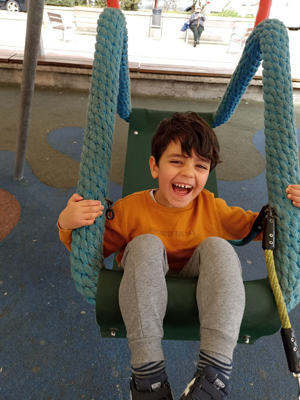
    When we received Lucas’s diagnosis, we were overwhelmed by different feelings. On the one hand, we felt relief and gratitude, because it is a very difficult disease to detect and at last we knew what was happening to our son. But of course, as it is not a well-known disease, uncertainty quickly appeared, followed by fear and sadness. The process of understanding, taking it in and accepting it was beginning. In fact, we are still in that process. In our case, it is helping us a lot to have found 6 other families with the same diagnosis, to know that we are not alone, to support one another and, above all, to know that we share the same goal. The commitment of the professionals close to Lucas is also a fundamental part of the long journey ahead of us, not forgetting the family and friends around us who always encourage and support us.

    How did you know something was wrong?

    From when he was very little, we began to notice that Lucas was not developing at the pace expected for his age. What at first seemed to be a motor problem turned out to be a developmental delay. We saw behavioural problems, delayed speech and difficulty understanding in the usual way, among other things. We also noticed that Lucas often seemed absent, staring into space. We were also struck by the fact that he sometimes fell in a strange way, as if his body was not responding: many symptoms that were hard to link to any common illness. At the age of three he had a genetic test, and with it came the diagnosis of SLC6A1.

    What are your dreams for Lucas?

    His happiness is what matters most to us, and if that means we have to fight to raise awareness, support research and achieve whatever is needed so that his independence, quality of life, health and wellbeing are the best they can be, we will do it to make that dream come true.

    Why are donations to SLC6A1 Spain needed?

    Fortunately, there are several lines of research that are getting good results. That is the good news; the bad news is that there are not enough resources to continue the research, at least at the pace our little ones need. Sadly, it is still an invisible disease, and we have to change that. This is where donations matter: even a small contribution can help enormously, because grain by grain you can build a castle.

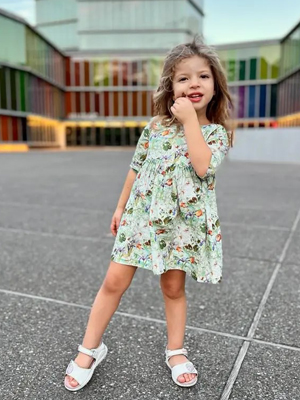
  • Allegria

    Allegria

    Allegria
    • Year of birth: 2019
    • From: Madrid
    • Diagnosed: November 2020
    • Parents: Celeste and Jordan
    • Siblings: Alma
    How would you describe Allegria?

    Allegria is a girl overflowing with love and joy, living up to her name. She loves music and dancing.

    How did we feel when we found out our child has SLC6A1?

    Everyone grieves in a different way, even within the same family. When you hear the news, your world falls apart. The first thing you do is search the internet about the disease, which does not help much, until suddenly you find associations like this one, where you can see the reality and the day-to-day life of the disease through families’ own experiences, rather than through medical reports, statistics or diagnoses.

    How did you know something was wrong?

    When she turned one, we noticed that she was not reaching developmental milestones properly, and she also had stereotypies. We decided to take her to the paediatrician, who referred us to the neurologist, who in turn referred us to the geneticist; months later we had the diagnosis. Allegria did not walk until she was 20 months old and, at 4 years old, she still has no verbal language, although she understands many things.

    The hardest part of being an SLC6A1 family?

    The difficulty communicating with our daughter and the frustration this causes her. This leads to disruptive behaviour because she does not know how to express what she feels or her emotions. As her cognitive development is slower than that of other children, the gap between her mental and physical age makes everything more complicated. And the uncertainty of not knowing how the disease will evolve.

    What are your dreams for Allegria?

    That she has a happy, independent and fulfilling life and finds a goal in which she feels fulfilled. We hope that research and better treatments will help her with this.

    What would you say to families who have just learned of the diagnosis?

    Stay strong. Finding out that your child has a rare disease is a long and painful process. We all hope our children will be healthy, but time and acceptance of the disease mean that, little by little, everything becomes more normal. Do not hesitate to ask for help. In this association you will find the support, experience and advice of other parents who have already been through it. Living with a rare disease is a long-distance race.

    Why are donations to SLC6A1 Spain needed?

    Donations help fund the study of the disease and support for families.

  • Marta

    Marta

    Marta
    • Year of birth: 2016
    • From: Asturias
    • Diagnosed: 2020
    • Parents: Raquel and Carlos
    How would you describe Marta?

    Marta is a very bright girl who loves exploring everything. She knows how to enjoy life. She has a great memory and a strong character. Despite the disruptive behaviours she shows, she is the joy of the house, a little dynamo. She loves music and is always humming something.

    How did we feel when we found out our child has SLC6A1?

    At first we felt relieved, because before we knew the diagnosis she went through lots of genetic tests, MRIs, ultrasounds… all of them negative, so we were living on edge, because we knew something was wrong with our little girl and nobody could find what it was. Afterwards we felt lost, alone and somewhat disappointed, because hardly anything was known about her mutation. Even so, all the therapies she was attending, even before we knew her diagnosis, were on the right track to support her development. Now, thanks to meeting more families who have children with this same mutation, we are more hopeful and encouraged to try, all together, to achieve improvement and, why not, a cure for this disease.

    The hardest part of being an SLC6A1 family?

    For us, the hardest thing is doing some activities that under normal circumstances would not be a problem: going to the park, going for a walk, going to the doctor, eating at a restaurant, going to school, even with educational support… The disorder associated with this mutation that affects her most is autism and everything that comes with it in terms of social relationships, language development, inappropriate behaviour, etc.

    What are your dreams for Marta?

    Like any parent of a child with an illness or disability, our dream is for a cure to be found or, failing that, something that can ease the symptoms and associated disorders, such as epilepsy. Meanwhile, our goal is for her to become more and more independent and sociable, and for her language development to allow her to express what is happening to her, what she wants, what she feels, and so on.

    What would you say to families who have just learned of the diagnosis?

    The first thing I would tell them is that they have been lucky to get the diagnosis. That they are not alone now. That thanks to this association we share experiences that help us a great deal to cope with day-to-day life differently. And together we find solutions to situations or questions that may arise. Together we have created a close-knit group that is very much needed and very rewarding.

    Why are donations to SLC6A1 Spain needed?

    Donations help fund the study of the disease and support for families. They are essential because, as this is a rare disease, it would be impossible to make progress without them.

  • Micaela

    Micaela

    Micaela
    • Year of birth: 2017
    • From: Málaga
    • Diagnosed: July 2021
    • Parents: Mari Carmen and Francis
    How would you describe Micaela?

    Micaela is a very cheerful, playful and affectionate girl. She is easy to love, and everyone who meets her ends up falling for her personality, because she truly is a very endearing and special girl.

    How did we feel when we found out our child has SLC6A1?

    For us it was a relief after years of uncertainty and emptiness. It also meant an improvement in the treatment of Micaela’s epilepsy, since having an accurate diagnosis is essential to achieve the most effective treatment possible. For years we did not have that specific diagnosis, which was frustrating because, as it is a rare and underdiagnosed disease, there is a great lack of knowledge and information about it.

    How did you know something was wrong?

    Micaela was a healthy baby who had no problems of any kind in her first months of life. However, little by little, as she grew, we began to notice that something was not right. She was not reaching developmental milestones normally, but with quite a delay. The “warning signs” that we found worrying began to appear from 12 months. She could not bear her feet touching the floor, she could not stand up, and her legs seemed weak, as if they were made of rag. She also did not like her hands being touched and was clumsy with fine motor skills. There was also a lack of imitation, and her play was that of a baby, centred on putting things in her mouth and little else.

    As her public health service paediatrician refused to acknowledge the problem, we decided to seek a second medical opinion. That is how we reached a first diagnosis: hypotonia. However, things got worse when, at 21 months, while Micaela was sitting in her high chair eating, she lost control of her body for a few seconds… it was something strange we had never seen before. These episodes happened again on other occasions, randomly and suddenly, without us being able to find a clear pattern or timing, as they only lasted a few seconds. Her physiotherapist told us about epilepsy and suspected that it might be the cause of these episodes, so she advised us to consult our paediatric neurology service. After a long wait, in May 2019, she was diagnosed with epilepsy. However, it was not until July 2021 that we obtained the definitive diagnosis for Micaela, thanks to Fundación 29 and her current doctor, Dr Ángel Aledo: epileptic encephalopathy due to a mutation in the SLC6A1 gene.

    The hardest part of being an SLC6A1 family?

    At first, the feeling of loneliness and the lack of support and guidance were overwhelming. We were lost and had no guidance of any kind, so we had to actively look for information and go to private healthcare services. The general lack of knowledge about this rare disease completely overwhelmed us. That is why we believe it is vitally important to set up a patient association to support other families who are going through this difficult situation.

    What are your dreams for Micaela?

    Micaela has great potential that has not yet been fully developed because of her disease. We are convinced that, if our daughter did not have this condition, she would be a brilliant girl, because even with her difficulties she shows she is exceptional. As parents, our greatest wish is for Micaela to be self-sufficient in the future, able to look after herself without having to depend completely on us. And our biggest dream is to find a cure for her disease. We are 100% convinced that it is possible, and we will fight tirelessly until we achieve it… hence our association’s motto: «Siempre Luchando Contigo» (“Always fighting by your side”, SLC6A1-SPAIN).

    Why are donations to SLC6A1 Spain needed?

    Help and donations are essential to advance research in search of a cure and to develop the best possible treatment, one that improves our children’s quality of life and is accessible to all families affected by SLC6A1.

  • Hugo

    Hugo

    Hugo
    • Year of birth: 2018
    • From: Bizkaia
    • Diagnosed: September 2019
    • Parents: Andrés and Laura
    • Siblings: Izan and Luka
    How would you describe Hugo?

    Hugo is a boy full of energy, although that means being on a kind of rollercoaster: one moment you see him happy and cheerful, the next he gets frustrated and cannot control his impulses and emotions.

    He is very affectionate and needs to feel our hugs and kisses all the time. He loves music and spending all his time with us.

    How did we feel when we found out our child has SLC6A1?

    The beginning was incredibly hard. You have to come to terms with a diagnosis that is also one of the so-called rare ones, with very little information available. We felt that our life plans were crumbling in front of us, and we felt enormous frustration. But little by little we have come to understand our son. We are trying to face each day and walk hand in hand along this SLC6A1 path, and although there are days when you feel you are drifting, meeting other families who feel the same as you has been a real boost and gives us the strength to keep fighting for them, in search of a cure that we hope will come soon.

    How did you know something was wrong?

    At around 4 months old, and given that we were not first-time parents because Hugo is our middle child, we could not help noticing that he was not reaching the developmental milestones for his age: he did not roll over, he could not sit up, he made no sounds, he did not use his hands to bring them to his mouth or to grab objects, and he did not pay attention when we spoke to him or turn towards us when we talked to him.

    At his 6-month check-up, although the paediatrician noticed that he was not reaching the developmental milestones, he told us the phrase that still echoes in our ears: “every child learns at their own pace”, and we chose not to make more of it; it was better to think that everything was fine, although something inside kept us on alert until the next check-up at 9 months, and that is when all the alarm bells went off. We were referred to paediatric neurology and to ENT (to rule out a possible hearing impairment), and after several tests and two genetic analyses (the first to rule out possible Rett syndrome) we received the diagnosis: epileptic encephalopathy due to a mutation in the SLC6A1 gene, with a possibly pathogenic, de novo variant.

    The hardest part of being an SLC6A1 family?

    The hardest part is precisely getting up every morning without knowing what the day will bring. The disease keeps him constantly on a rollercoaster where regulation is very difficult, and it pulls all of us into that spiral of ups and downs. It is not easy to cope with a child who cannot speak even though he has an enormous need to communicate (and that frustrates him), who is completely dependent for everything, who goes from laughter to tears in the blink of an eye, who constantly has to deal with fears, insecurities and frustrations, and who is very overexcited all day long.

    What are your dreams for Hugo?

    Above all, that he is happy, and that we manage to help him become as independent as possible and achieve whatever he sets out to do. Hearing him talk would be wonderful, but finding a communication system that lets him express his needs, interests and emotions would be a real achievement. The road will be long and probably difficult, but we are never going to throw in the towel. We are going to find the cure that wakes us from this nightmare! Or at least, we are going to try.

    What would you say to families who have just learned of the diagnosis?

    That even though it may seem their world is falling apart (nothing could be further from the truth), and even though everything looks bleak at first, they are not alone. Here we are, a group of families who also suffered, who felt anger, fear, frustration and even guilt when we received the diagnosis, and who also felt our world was ending. We will help them through the whole process and they will never feel alone. Together we will achieve the best for our children.

    Why are donations to SLC6A1 Spain needed?

    Donations are not just needed, they are ESSENTIAL, because without your support we cannot raise awareness of the disease or look for treatments that improve our children’s quality of life (and who knows whether one day we will achieve a gene therapy that solves the problem; that is our number one goal).

    Because SLC6A1 is a rare disease, yes, but together we have to make it visible, and for that, social awareness and above all your help are vital. Without funds there are no research options, and without research there is no possibility of a cure.