SLC6A1 Developmental and Epileptic Encephalopathy
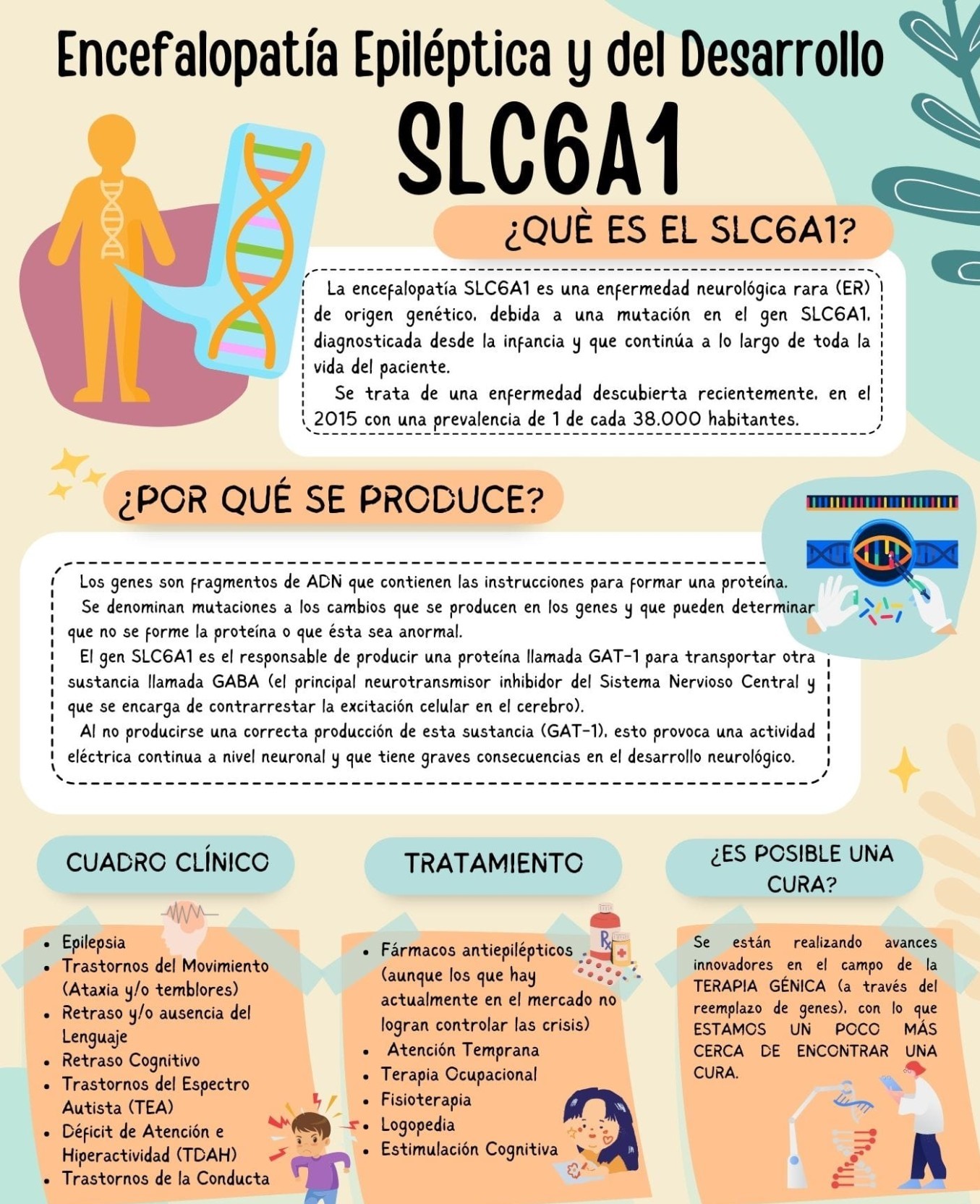
It is a rare neurological disease of genetic origin, caused by a mutation in the SLC6A1 gene. It is diagnosed in childhood and continues throughout the patient’s life. It is a recently discovered disease.
The first cases were diagnosed in 2015, so there are probably many earlier cases that were never diagnosed. Its prevalence is estimated at 1 in every 38,000 people or, put another way, 3,500 new cases a year worldwide.
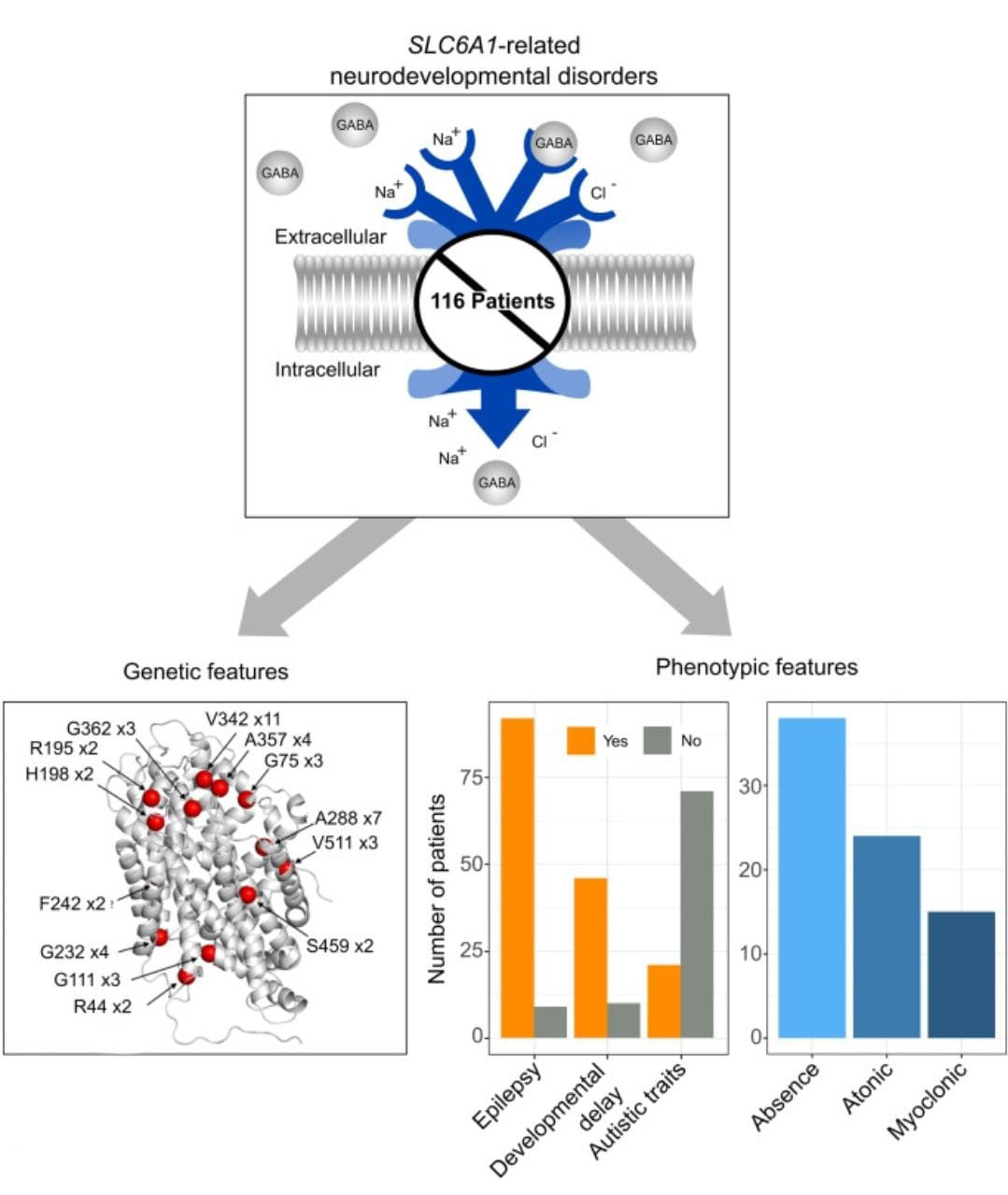
SLC6A1 developmental and epileptic encephalopathy is an autosomal dominant genetic disorder characterised by the loss of function of one copy of the human SLC6A1 gene.
Studies carried out in recent years have identified several dozen pathogenic variants of this gene and, in most people with SLC6A1, the variant arose spontaneously (“de novo”) and was not inherited from either parent.
Some of these variants are associated with autism or with various epilepsy syndromes (such as Doose syndrome or myoclonic-astatic epilepsy (MAE), childhood absence epilepsy, epilepsy with eyelid myoclonia and Lennox-Gastaut syndrome), with intellectual disability as a prominent feature.
- SLC6A1 mutations cause a broader phenotype than MAE alone (myoclonic-astatic epilepsy).
- The SLC6A1 phenotype consists of absence seizures and mild to moderate intellectual disability.
- The common EEG (electroencephalogram) pattern includes irregular, very wide, generalised spike-and-wave discharges.
What is a gene?
We will try to explain it simply, so that it is easier to understand what this disease involves. To begin with, this disease has to do with the brain. We can compare our brain to a computer that controls the whole body. Without the brain we could not do anything.
If, for example, we want to move our fingers, the brain sends a signal to the muscles of the hand. But the brain does not only send information; it also receives it from the rest of the body. For example, if we do not eat anything for a while, a signal travels from the stomach to the brain to tell us that we are hungry.
For all of this, the brain is helped by nerve cells. These cells are called NEURONS; they are found throughout the body and send signals to the brain. Each neuron has small branches that allow it to connect to other neurons.
When we learn, messages travel from one neuron to another again and again. Over time, the brain creates connections or pathways between neurons, which makes tasks easier and allows us to get better at them.
We have now explained that neurons are the nerve cells of the human body, and we have seen how important they are for carrying information from some cells to others so that we can, for example, move, eat, laugh, cry, run, breathe, learn maths or Basque, or play sport.
It is important to know what GENES are, because this disease is caused precisely by a mutation in a specific GENE called SLC6A1. Each cell of the human body contains between 25,000 and 35,000 genes. These genes contain the information that determines our traits and characteristics, which we inherit from our parents.
For example, if both your father and your mother have green eyes, it is very likely that you will too, because you have inherited that trait from both of them. In the same way, if your mother has freckles, you may have them too because you have inherited that trait.
Genes play a fundamental role in passing these characteristics on from one generation to the next.
Where are these important genes found?
Genes, which are so small that they cannot be seen, are found in tiny spaghetti-like structures called chromosomes. These chromosomes live inside our cells.
Our body is made up of trillions of cells, and most of them have a nucleus that acts as the brain of the cell. The nucleus holds our chromosomes and genes, and that is where the key information is found.
In human beings, the cell nucleus contains 46 different chromosomes, or 23 pairs of chromosomes. Half of these chromosomes come from your father and the other half from your mother, and each chromosome contains hundreds (sometimes even thousands) of genes. Both chromosomes and genes are made of DNA, which is like the identity card of our cells.
How do genes work?
Each gene has a special job. The DNA of a gene contains specific instructions, like a recipe, for making PROTEINS that are essential for the cell. These proteins are needed to build structures such as bones and teeth, hair, muscles and blood, for example. Proteins also help the body to grow, work and stay healthy.
The SLC6A1 gene is located on chromosome 3 (the third largest of the 23 pairs of chromosomes in the human body), and its function was discovered recently, in 2015 (Carvill et al.).
This gene is responsible for the correct production and functioning of a protein called GAT-1 (γ-aminobutyric acid transporter 1), whose main job is to transport GABA, the main inhibitory neurotransmitter of the nervous system. GABA plays the important role of counteracting neuronal excitation in the brain (to put it simply, it is extremely important for relaxing, feeling safe, processing stimuli, etc.). When this inhibition is significantly disrupted, it has a negative impact on brain development, leading to cognitive and attention deficits as well as seizures.
In people affected by SLC6A1, GAT-1 is not synthesised correctly. This directly affects the transport and reuptake of GABA in the brain (as a result, there is very little GABA present, which means that certain brain cells cannot properly transmit their signals to other brain cells) and consequently causes continuous electrical activity at neuronal level, with serious consequences.
When there is a problem with the genes…
Scientists are very busy studying genes. They want to know which proteins each gene makes and what those proteins are for. They also want to know which diseases are caused by genes that do not work properly because they have undergone an alteration or change, known as a GENETIC MUTATION, which is precisely what has happened to our children: they have a mutation in the SLC6A1 GENE. Many diseases and health problems occur when genes are missing or extra, or when they do not work properly. In many children with SLC6A1, delays in reaching developmental milestones during infancy or early childhood may be the first sign of the condition, as well as altered hand use in babies or reduced muscle tone (hypotonia). In other cases, epileptic seizures are the first sign of the disease; they usually begin around 2 years of age and are sometimes accompanied by developmental regression. However, the age of onset varies widely between individuals, from around 6 months to later in childhood, and may include seizures of different types and severity. It is also possible that some people with SLC6A1 never develop epilepsy.
In addition to epilepsy, they may have movement disorders, particularly ataxia or tremor, and delayed or completely absent speech. Almost all people with SLC6A1 have some degree of developmental delay and cognitive impairment, ranging in severity from mild to severe. They also show features of autism spectrum disorder (ASD) and behavioural disorders, including aggression, hyperactivity and other problems such as behavioural changes, bipolarity and schizophrenia.
Because SLC6A1-related disorders were discovered relatively recently, the full range of symptoms has probably not yet been described.
- EPILEPSY
- COGNITIVE DELAY
- DELAYED AND/OR ABSENT SPEECH
- AUTISM SPECTRUM DISORDER (ASD)
- GAIT DISORDER
- (ATAXIA, TREMORS)
- BEHAVIOURAL CHANGES
Types of epilepsy
Epilepsy is a disorder of the brain. A person is diagnosed with epilepsy when they have had two or more seizures.
There are different types of seizures, and a person with epilepsy may experience more than one type. The signs of a seizure vary depending on its type. Sometimes a seizure is hard to recognise, as the person may seem confused or stare at something that is not there. Other seizures can cause falls, shaking and a lack of awareness of what is happening around them.
Seizures are divided into two main groups: generalised seizures (which affect both sides of the brain) and focal seizures (which are located in one specific area; they are also called partial seizures).
Generalised seizures
- Absence seizures, also known as petit mal. They are characterised by episodes of rapid blinking or staring into the distance for a few seconds.
- Tonic-clonic seizures, also called grand mal. They can cause the person to cry out, lose consciousness, fall to the ground, and have muscle stiffness and spasms. After a tonic-clonic seizure, the person may feel tired.
Focal seizures
- Simple focal seizures affect a small part of the brain and can cause jerking or a change in sensations, such as strange tastes or smells.
- Complex focal seizures can make the person feel confused or dazed, and they will not be able to answer questions or follow instructions for a few minutes.
- Secondary generalised seizures start in one part of the brain but then spread to both sides of the brain. In other words, the person first has a focal seizure followed by a generalised seizure. These seizures can last several minutes.
Treatment of symptoms
Unfortunately, there is still no cure for the disease. At present, treatment of SLC6A1 focuses on relieving symptoms and improving patients’ quality of life. This includes the use of antiepileptic medicines and therapies such as early intervention, occupational therapy, physiotherapy and speech therapy, which are the only tools that families currently have. There is a wide spectrum of variants in this disease, and the medicines currently available on the market do not manage to control the epileptic seizures and, consequently, the neurological damage.
Cognitive stimulation
Cognitive stimulation is the name given to all the actions and strategies that support the development, stimulation and improvement of cognitive functions in general, through exercises in memory, perception, attention, concentration, language and executive functions such as:
- Problem solving.
- Planning.
- Reasoning and control.
- Praxis and visuospatial functions, through structured stimulation programmes.
In other words, this treatment is based on stimulating and maintaining existing cognitive abilities, with the aim of improving or maintaining cognitive functioning and slowing the decline that continuously occurs.
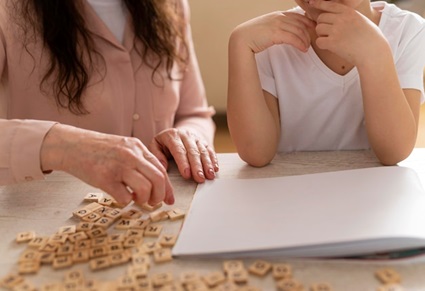
Speech therapy
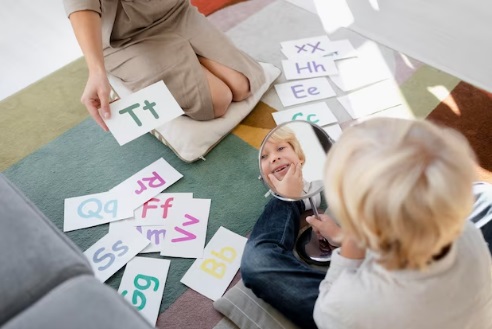
Speech therapy studies, treats and prevents disorders of human communication.
We usually think of professionals who help people pronounce certain letters correctly, but their work goes much further.
On the one hand, by improving the way people with some difficulty communicate, they help them feel much better about themselves.
On the other hand, they also treat cognitive or physical problems.
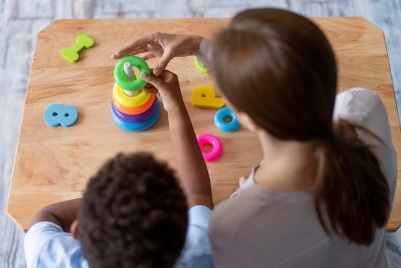
Occupational therapy
Occupational therapy for children aims to achieve the greatest possible independence and participation of the child in their daily activities and routines. It seeks to promote health and participation in life through occupations, in this case those typical of child development. A child may be referred to occupational therapy to overcome challenges related to self-care, productivity, play and leisure, or because of difficulties in sensorimotor, cognitive and psychosocial components of development that may interfere with the learning process (AOTA, 1999).
The aim of occupational therapy for children is for a child with a disability, or at risk of one, to carry out their daily and meaningful occupations as independently as possible, taking an active part in the community. Occupational therapy uses activities of daily living (ADLs), adapting the task and the environment so that the child can maximise their independence and participation.

Physiotherapy
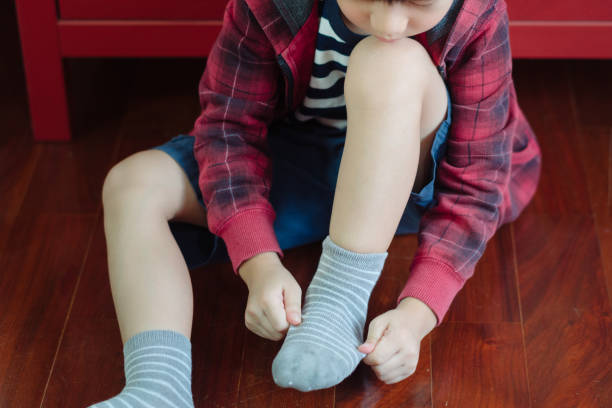
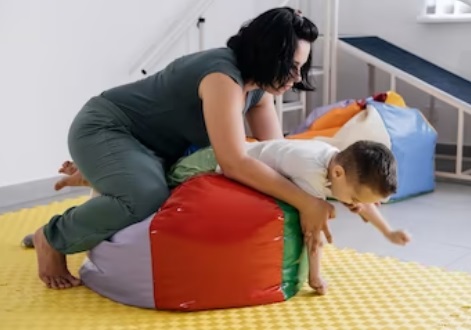
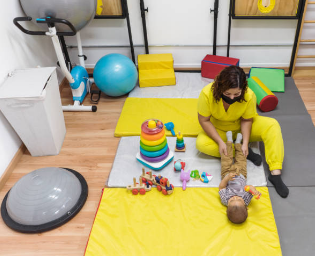
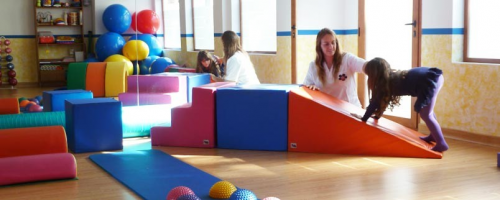
Paediatric physiotherapy is the branch of physiotherapy responsible for the advice, treatment and care of babies, children and adolescents who have a general developmental delay, movement disorders (whether congenital or acquired) or who are at risk of having them. Paediatric physiotherapy is actively involved in aspects related to the child’s motor development, muscle tone, motor coordination, balance and postural control.
A physiotherapist specialising in paediatrics has many resources and techniques: mobilisations, strengthening exercises, respiratory physiotherapy techniques, the design and fitting of postural or mobility aids, the adaptation of objects, etc. But the main tools are play and encouraging the learning of movement.
However, these functions do not replace the more usual and well-known ones in the field of communication. The main task of speech therapists is to treat communication disorders, including spoken and written language. They also work to improve possible dysfunctions in speech, hearing or other oral functions related to swallowing or breathing.
Psychomotor therapy
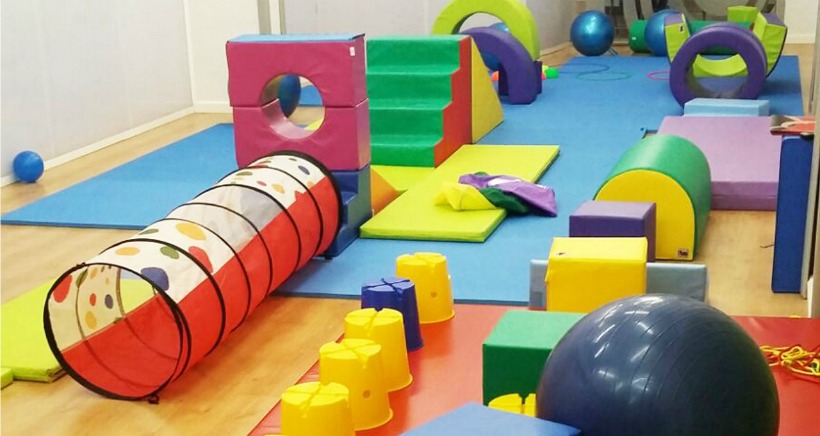
Psychomotor development is one of the most important aspects of a child’s development, so it needs to be worked on in all its areas. Its purpose is to develop motor, cognitive and social-emotional skills.
Psychomotor education includes seven basic elements that influence the development of boys and girls: perception, motor skills, laterality, balance, body schema, space, time and rhythm (Pérez, 2004). After analysing the definitions of psychomotor education, we understand that its main aim is to strengthen the relationship between the child and their environment through activities involving perception, motor skills, laterality, balance, the construction of space and time, and body schema, taking into account the child’s interests and needs.
Equine-assisted therapy
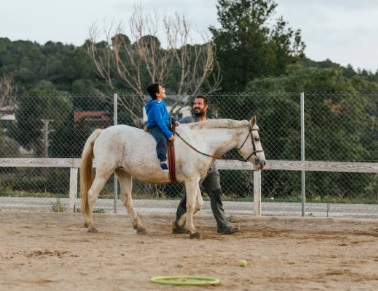
Equine-assisted therapy, or therapy with horses, is a type of therapy used to treat physical or psychological disorders. It supports people’s cognitive development and helps improve their communication skills. The horse is the only animal used in therapy that can be ridden, and its movement is essential because it produces sensations similar to those humans feel when walking. The horse’s three-dimensional movement creates a gait that produces a state of relaxation and helps children who are agitated or anxious by bringing them peace and calm.
Equine therapy has wide sensory benefits. At a walk and a trot, the child receives a series of rhythmic impulses that support postural control, regulation of muscle tone and balance reactions. It also brings another important benefit: it improves communication skills. A good therapist guiding the child during therapy can get them to follow instructions through playful activities and interactive games.

Is a cure possible?
In recent years there have been important advances in the field of gene therapy to address genetic errors that are normally permanent and cannot be cured.
One of the promising strategies is gene therapy, which involves introducing a functional gene into a patient using a viral vector. Once inside the patient, the functional gene is released from the vector and replaces the faulty gene.
In addition, research is under way into ASO therapy (synthetic antisense oligonucleotides), a type of RNA therapy similar to the Covid-19 vaccines but designed specifically to regulate the production of the protein associated with the SLC6A1 gene. These advances are important steps towards developing possible treatments to correct genetic alterations.
There is currently no cure available for this disease. The main approach focuses on treating symptoms with antiepileptic drugs (AEDs) and therapies such as occupational therapy, physiotherapy and speech therapy to support language development. It is important to bear in mind that there is no single treatment that works for all children, as each case may be different. However, gene therapy approaches using adeno-associated virus (AAV) vectors are being investigated to address mutations in the SLC6A1 gene. These advances in gene therapy represent a promising option for the future.
Visit https://slc6a1connect.org/gene-therapy/ for more information on the latest research.
What is gene therapy?
Gene therapy is the set of techniques that use the transfer of genetic material (or any other method that makes it possible to edit or modify the patient’s genetic information) to prevent or cure genetic diseases. It is undoubtedly the best of all the possible alternatives, but probably also the most complex.
It goes straight to the root of the problem by transferring the correct version of a faulty gene, the one that is causing the disease. The main obstacles to this approach include the difficulty of directing the genetic material specifically to the cells or tissues where the gene needs to do its job, and of making the regulation of the introduced gene resemble the way the gene is regulated in healthy people.
Gene therapy can restore the function of the mutated gene, and the most common strategy is to introduce a normal copy of it into the cells. It is also possible to inhibit or block the activity of genes that contribute to the development of the disease (for example, the oncogenes involved in cancer, or the virus genes that viruses need in order to multiply in cells).
Gene therapy can be applied using different techniques: it can be carried out in somatic cells (somatic gene therapy), whereas if it is carried out in germ cells (sperm, eggs) we speak of germline therapy (although it has been objected that germline gene therapy violates human dignity because it changes the genetic make-up of future generations, whose consent cannot be obtained and whose interests are difficult to determine).
For this reason, today we focus on SOMATIC GENE THERAPIES, which in turn can use different techniques:
Somatic gene therapy techniques
Therapies like these make us look to the future with optimism. How fantastic and important would it be if a gene therapy could be developed that could repair this gene?
EX VIVO THERAPY
This consists of removing the cells that need to be repaired from a patient, repairing them in the laboratory and then reimplanting them in that person’s body.
IN SITU THERAPY
This consists of introducing the repairing gene directly into the person’s affected organ.
IN VIVO THERAPY
This consists of administering the correcting gene directly to the patient so that it reaches the area to be treated.
SLC6A1-Spain leaflet